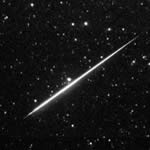
 Ushering in Earth Day tonight will be the annual Lyrid meteor shower, which takes place each April but is said to be particularly visible in the coming nights. The Lyrids have been observed for 2600 years but, according to astronomers, should be most visible after midnight and into the pre-dawn hours both tonight and tomorrow. These meteor showers are best viewed away from artificial light. The Lyrids produce about 10 to 20 meteors per hour, sometimes more, and often produce a luminous train of dust that can be observed for many seconds.

KBHR 93.3 and 102.5 - Big Bear News
Music, News, Road Conditions, Sports - Big Bear Lake, California

